Celebrating Women in Vaccines | International Day of Women and Girls in Science 2023
International Day of Women and Girls in Science is an annual UN observance day highlighting the underrepresentation of women in science, technology, engineering and mathematics (STEM) around the world and advocating for their equal access to, and leadership in, such fields.
Along with our partner organizations in the UN family and global health ecosystem, IVI strongly believes in the importance of gender equality in achieving global goals, including SDG 3, Ensure healthy lives and promote well-being for all at all ages. Gender equality is a critical factor in how we work and what we work toward beyond our walls. Every February 11, IVI aims to raise awareness of women’s contributions in scientific research and development while demonstrating the impact of Gender Equality on the improvement of global health outcomes and opportunities for all.
This year, we joined forces with the embassies of Sweden and Germany in the Republic of Korea (IVI’s host country) along with some of IVI’s own scientists and collaborators to celebrate Women in Vaccines and their scientific contributions. We applaud their dedication and commitment to improving global health by preventing the spread of viruses and infectious diseases.
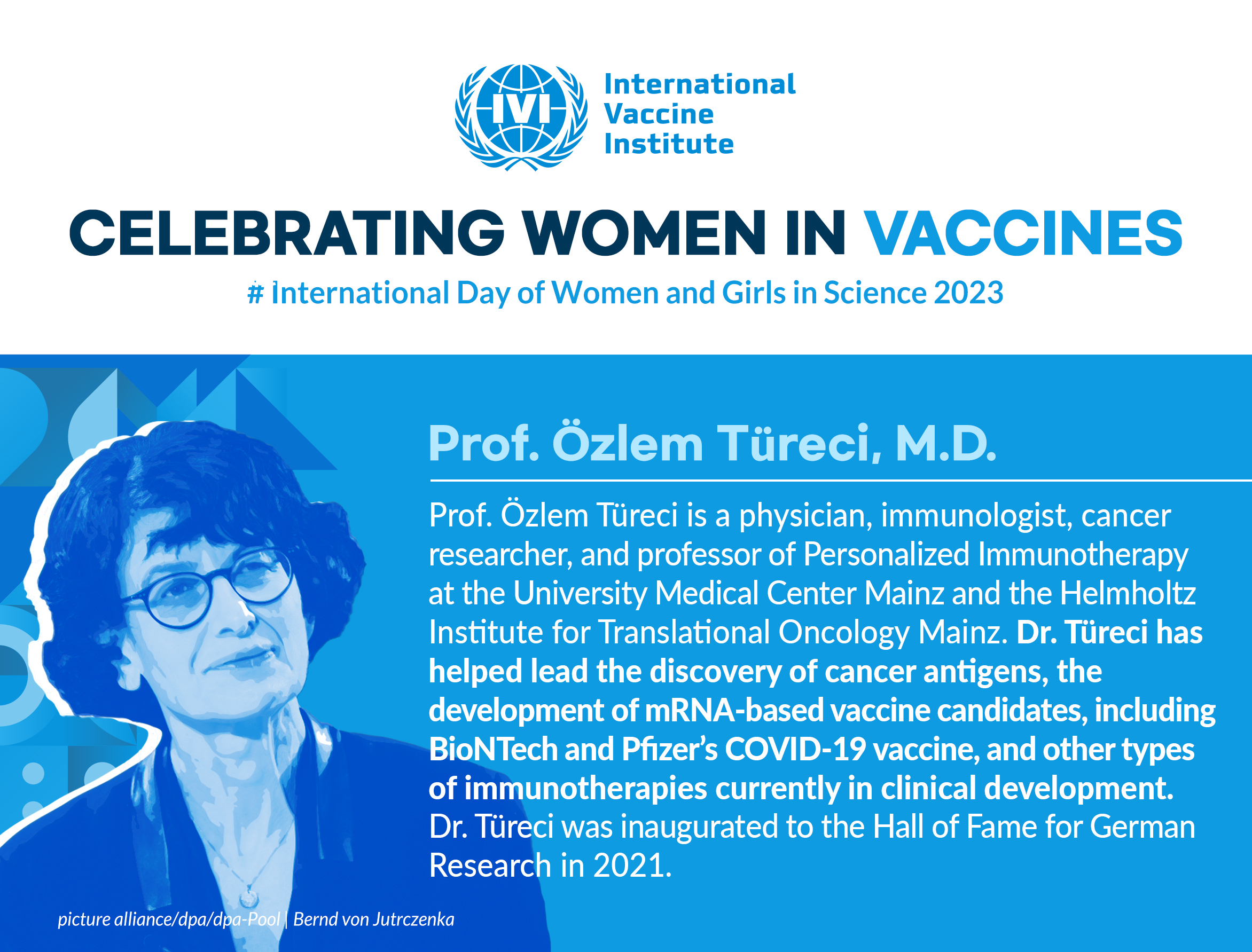
Prof. Dr. Özlem Türeci helped lead the development of the BioNTech/Pfizer COVID-19 vaccine
Prof. Özlem Türeci, M.D. is a physician, immunologist, cancer researcher, and professor of Personalized Immunotherapy at the University Medical Center Mainz and the Helmholtz Institute for Translational Oncology Mainz. Dr. Türeci has helped lead the discovery of cancer antigens, the development of mRNA-based vaccine candidates, including BioNTech and Pfizer’s COVID-19 vaccine, and other types of immunotherapies currently in clinical development.
Dr. Türeci was crowned Person of the Year in 2020 by the Financial Times and inaugurated to the Hall of Fame for German Research in 2021.
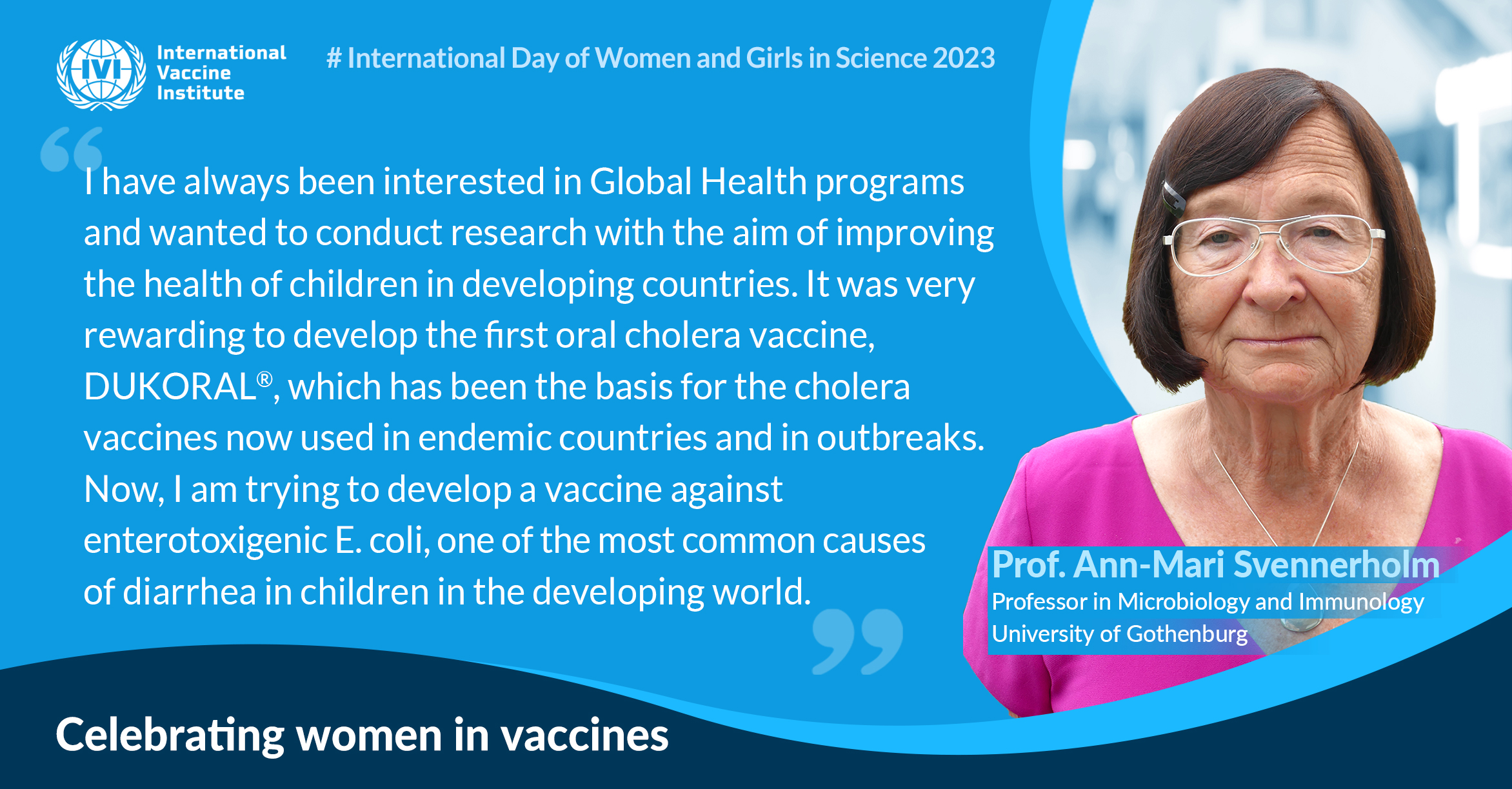
Prof. Ann-Mari Svennerholm co-developed the world’s first oral cholera vaccine
Prof. Ann-Mari Svennerholm is a professor in microbiology and immunology at the Institute of Biomedicine at Gothenburg’s University. She is one of Sweden’s most prominent researchers in the field of medicine and has devoted her scientific career to studying the pathogenic and immune mechanisms of enteric bacteria. Together with Professor Jan Holmgren, Prof. Svennerholm developed the world’s first oral cholera vaccine, DUKORAL ®.
She has received His Majesty the Swedish King’s medal for scientific contributions in biomedical research and served on numerous national and international boards in the fields of infections, vaccines, and global health. Prof. Svennerholm remains devoted to developing effective oral vaccines against enterotoxigenic E. coli.
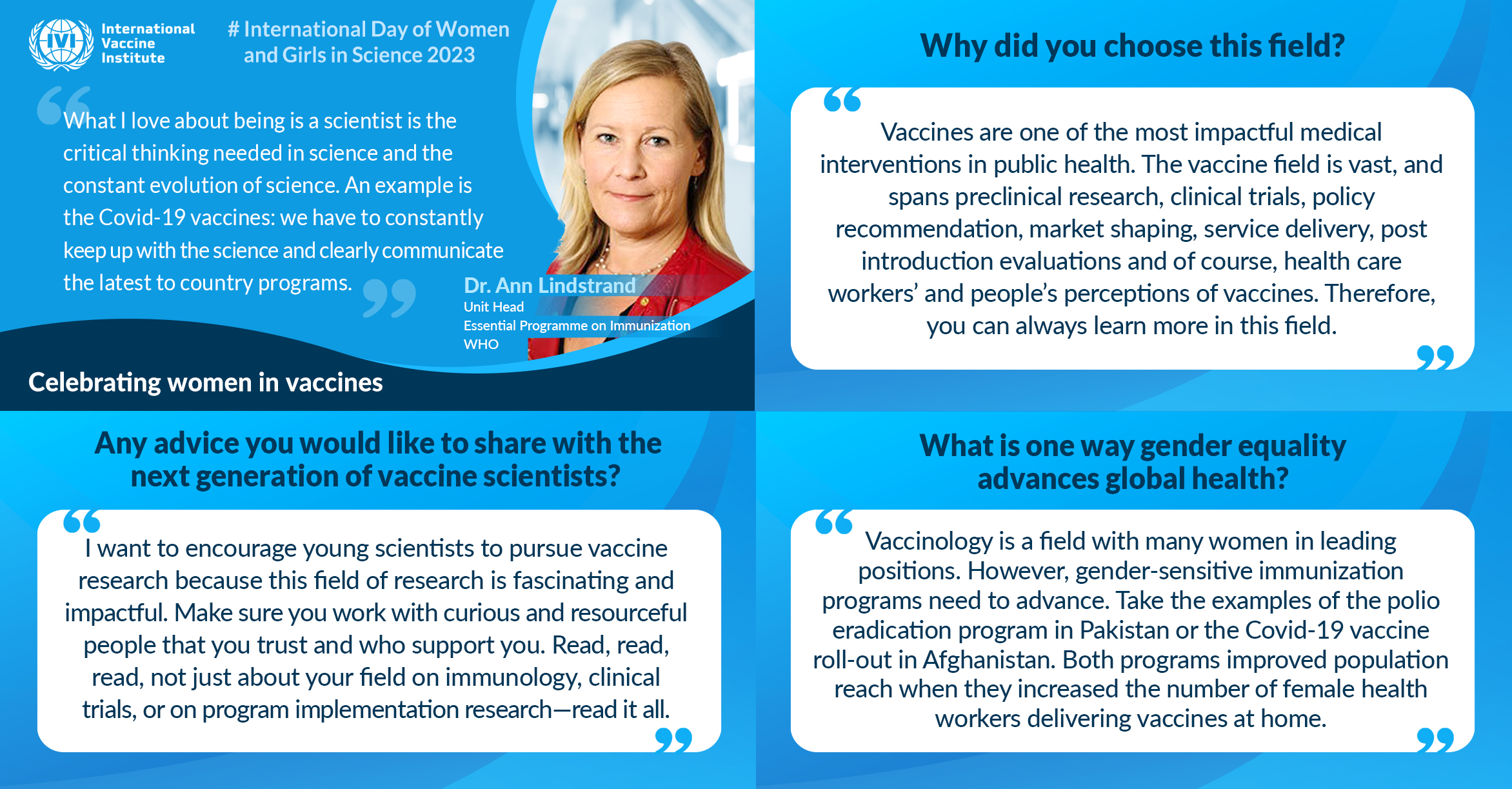
Dr. Ann Lindstrand led teams to support the COVAX program during the global COVID-19 pandemic
Dr. Ann Lindstrand is a pediatrician and specialist in Public Health and Social Medicine. Ann has over 30 years of experience in global health, research, lecturing, and program implementation. She authored a textbook on global health and has previously worked as the National Program Manager for Immunization and NITAG chair at the Public Health Agency of Sweden. Dr. Lindstrand currently serves as the Head of the Expanded Programme on Immunization Unit (EPI) at WHO in Geneva.
During the pandemic, Dr. Lindstrand worked to support the COVID-19 vaccine roll out through COVAX and the Covid Delivery partnership, leading teams in WHO and UNICEF to elaborate global guidance, tools, and training, as well as with direct operational support.
We also spoke with Dr. Edlawit Mesfin Getachew at the Armauer Hansen Research Institute (AHRI) in Addis Ababa, Ethiopia, one of IVI’s Collaborating Center partners, and two of our own IVI scientists to ask about their work and how gender equality informs global health.
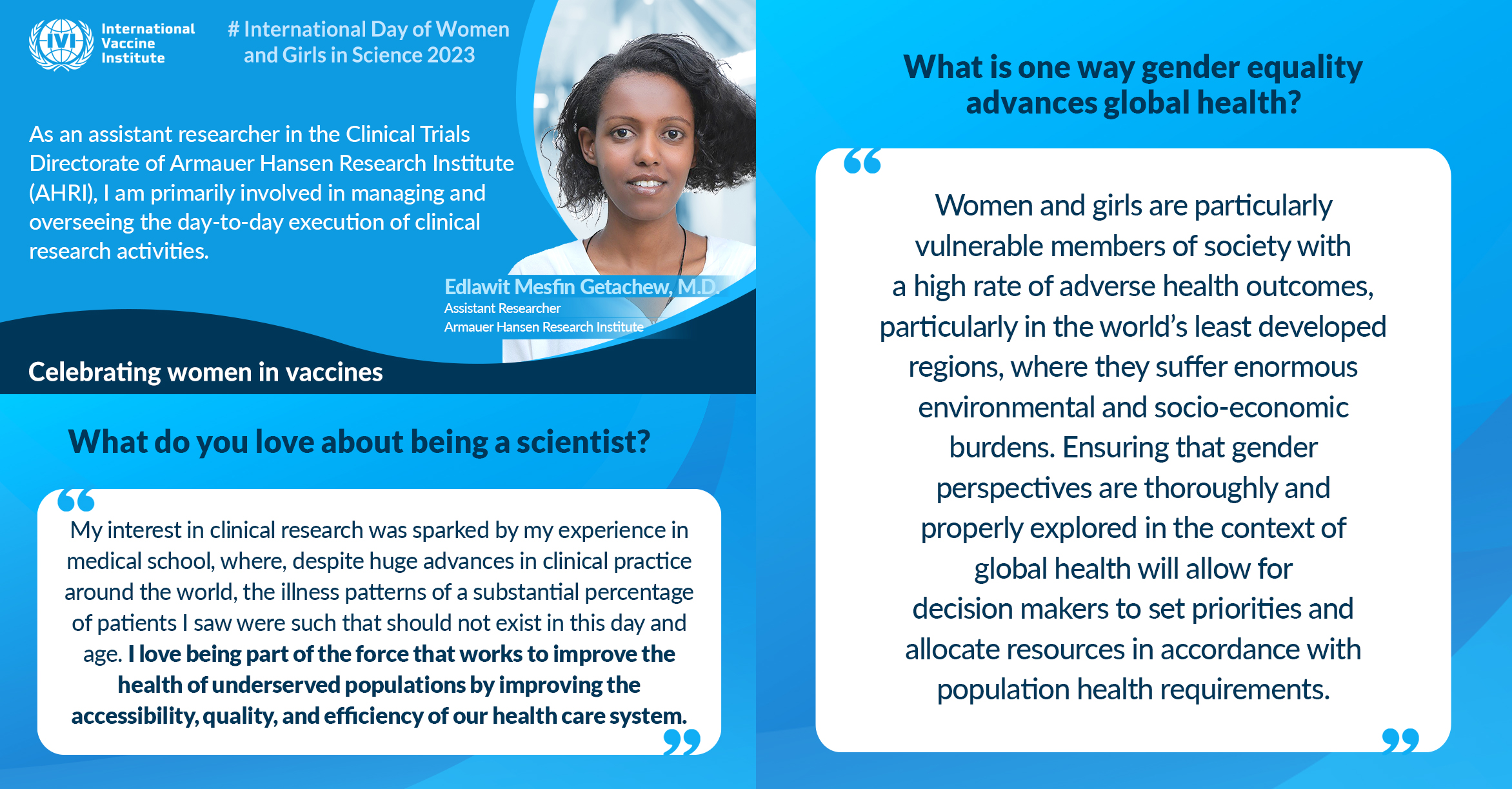
Dr. Edlawit Mesfin Getachew
What does your job involve?
As an assistant researcher in the Clinical Trials Directorate of Armauer Hansen Research Institute (AHRI), I am primarily involved in managing and overseeing the day-to-day execution of clinical research activities.
I have been involved in various clinical research projects at various capacities. Moreover, I oversee updating Principal Investigators and project stakeholders on the progress of study activities, shed light on challenges and jointly plan ways forward.
In my current post as a local data monitor on the Ethiopia Cholera Control and Prevention Project (ECCP) I was actively involved in the coordination of a successful cholera vaccination campaign that took place in one of the disease hot spot area in the country. Moreover, over the prospective cholera and diarrheal disease surveillance aspect of the project I am primarily responsible for ensuring and monitoring research activity adherence to study protocol. Outside of this I am also actively involved in grant proposal preparations in the directorate on different priority areas to solicit resource and collaboration from international organizations in order to tackle different health problems.
What do you love about being a scientist?
My interest in clinical research was sparked by my experience in medical school, where, despite huge advances in clinical practice across the world, the illness patterns of a substantial percentage of patients I saw were such that should not exist today. Furthermore, with the worrisome growth in the prevalence of non-communicable illness, I became aware of the lack of attention to health care and the desperate need for effective public health interventions beyond infrastructure installation.
I realized that to make a lasting impact in this field more physicians who have hands-on experience and observation of the problem should also be a part of the solution. I strongly believe in the potential of clinical research to understand current practice, identify areas of strength and weakness, and inform decisions. Most importantly, I love being part of the force that works to improve the health of underserved populations by improving the accessibility, quality, and efficiency of our health-care system.
What is one way gender equality advances global health?
Women and girls are particularly vulnerable members of society with a high rate of adverse health outcomes, particularly in the world’s least developed regions, where they suffer enormous environmental and socio-economic burdens. Ensuring that gender perspectives are thoroughly and properly explored in the context of global health will allow for decision makers to set priorities and allocate resources in accordance with population health requirements.
At IVI, Dr. So Jung An and Sunee Chuasuwan share Dr. Getachew’s passion for contributing to the betterment of global health and find joy in taking on the challenges presented throughout the process of vaccine research and development.
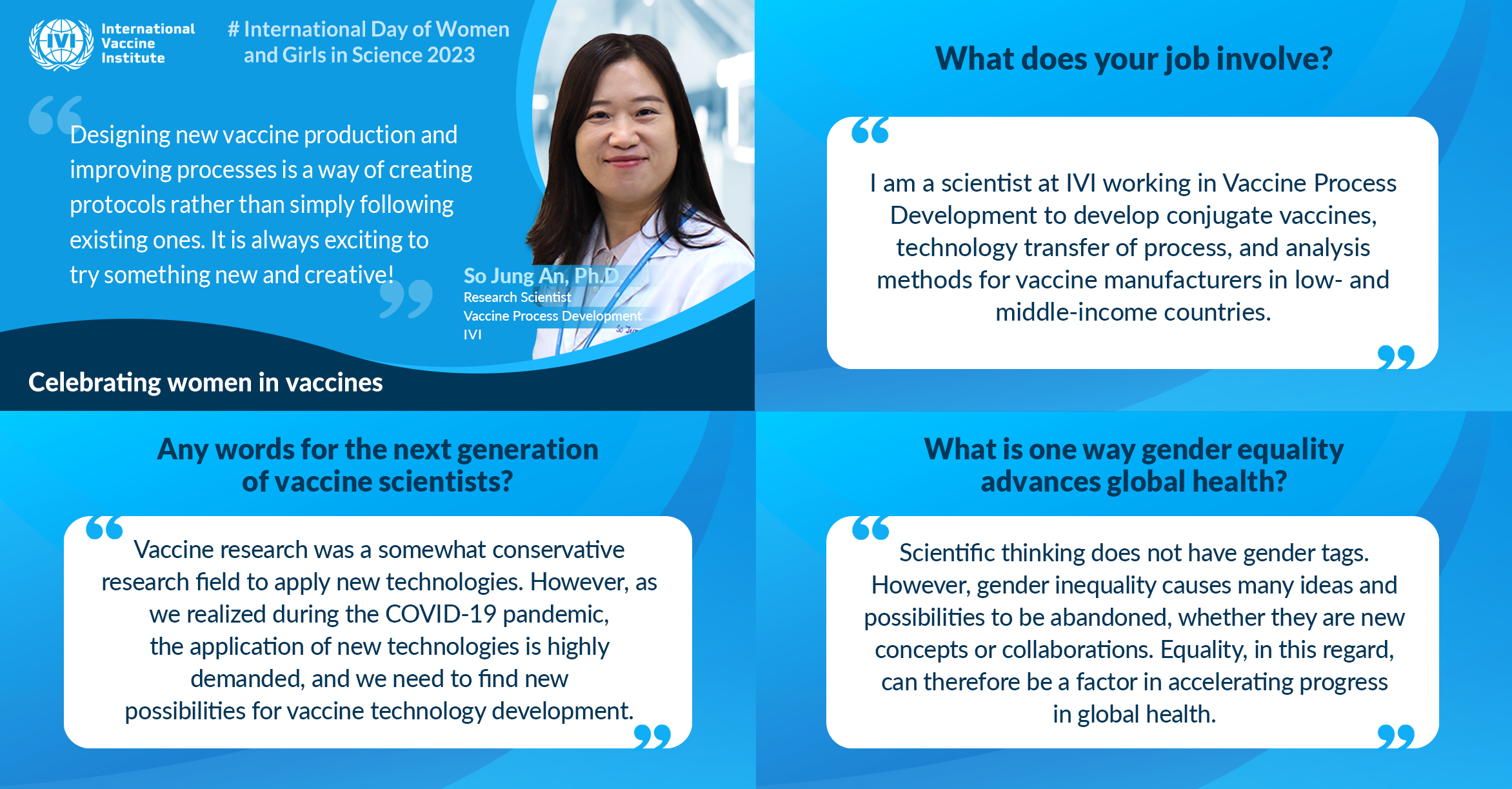
Dr. So Jung An
What does your job involve?
I am a scientist at IVI working in Vaccine Process Development to develop conjugate vaccines, technology transfer of process, and analysis methods for vaccine manufacturers in developing countries.
What do you love about being a scientist?
Designing new vaccine production and improving processes is a way of creating protocols rather than simply following existing ones. It is always exciting to try something new and creative!
Any advice you would like to share with the next generation of vaccine scientists?
Vaccine research was a somewhat conservative research field to apply new technologies. However, as we realized during the COVID-19 pandemic, the application of new technologies is highly demanded, and we need to find new possibilities for vaccine technology development.
What is one way gender equality advances global health?
Scientific thinking does not have gender tags. However, from new concepts to new vaccine product developments through various collaborations, gender inequality causes many ideas and possibilities to be abandoned. Gender equality can therefore be a factor in accelerating progress in global health.
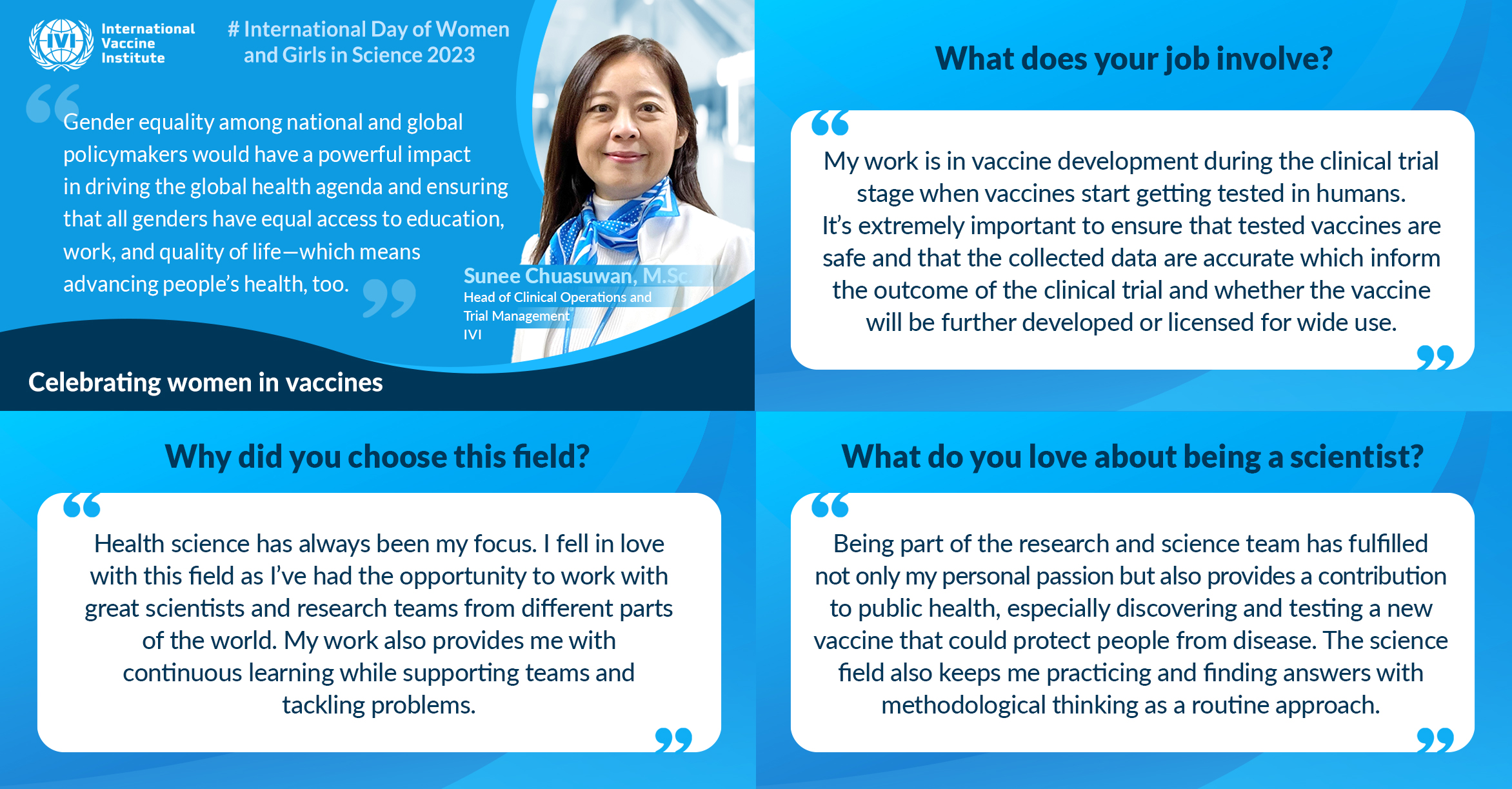
Sunee Chuasuwan
What does your job involve?
My work is in vaccine development during the clinical trial stage when vaccines start getting tested in humans. It’s extremely important to ensure that tested vaccines are safe and that the collected data are accurate which inform the outcome of the clinical trial and whether the vaccine will be further developed or licensed for wide use. Preventing diseases is the ultimate goal.
Why did you choose this field?
Health science has always been my focus. I fell in love with this field as I’ve had the opportunity to work with great scientists and research teams from different parts of the world. My work also provides me with continuous learning when supporting teams and tackling problems. For me, it’s much more fun to face challenges, than just working in a pleasant environment.
What do you love about being a scientist?
Being part of the research and science team has fulfilled not only my personal passion but also provides a contribution to public health, especially discovering and testing a new vaccine that could protect people from disease. You feel rewarded after working so hard and seeing an outcome that works. The science field also keeps me practicing and finding answers with methodological thinking as a routine approach.
What is one way gender equality advances global health?
Gender equality would help everyone gain equal access to education, work, and quality of life–which means advancing people’s health, too. Gender equality among national and global policymakers would have a powerful impact in driving the global health agenda and ensuring that all genders have equal access.
By Elsa Ström
Last updated February 10, 2023